
Coves of northern Menorca: the complete guide
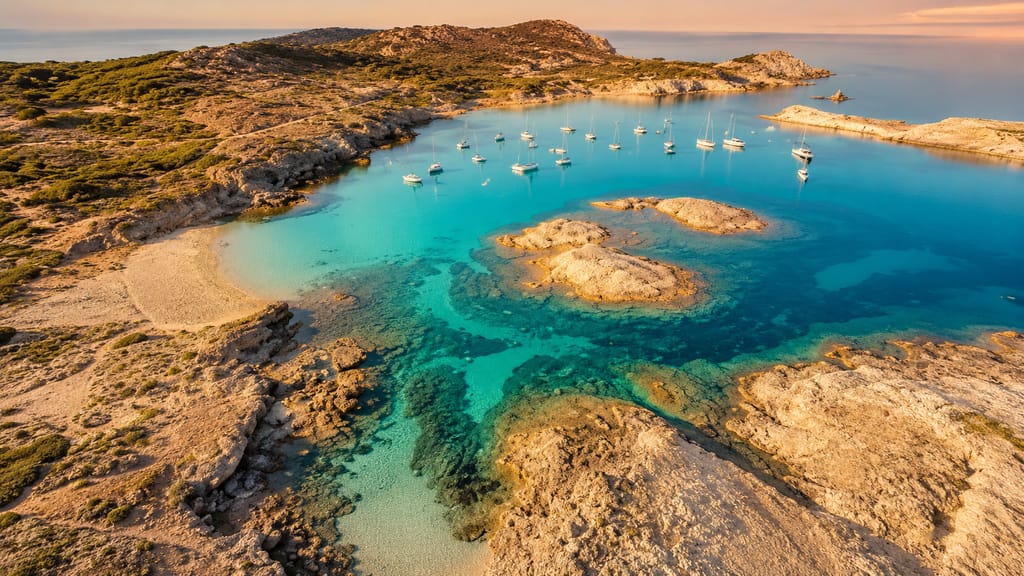
The north of Menorca is nothing like the south. If the southern coves are white sand and turquoise water over a pale seabed, the coves of northern Menorca have a different character: reddish and golden sands, dark slate rock, islets in plain sight and a wilder landscape. This is the coast of the Tramuntana, the north wind that here calls the shots more than the clock does. Some of these beaches are among the most beautiful unspoilt coves in the north of the whole island, and several can only be reached after a fair walk or by sea.
This is the informative guide to the area: cove by cove, where each one is, how to get there, whether it is built up or still unspoilt and what makes it different. It is not a list of excursions; for that you have our boat routes around Menorca. What I want here is for you to know what the north has to offer before you decide where to slip off your flip-flops.
If you are coming from the other side of the island, you will also want the guide to the coves of southern Menorca and the general guide to the coves of Menorca, where I compare north and south and explain how to choose.
The Tramuntana: the first thing to understand about the north
Before we talk about coves, a word of warning that any Menorcan will give you: the north is exposed to the Tramuntana, the north and north-westerly wind that blows hard for a good part of the year. When it sets in, it raises a swell, clouds the water and leaves many northern coves uncomfortable or simply unreachable by sea.
That has two practical consequences. The first is that on a day of strong Tramuntana a northern cove that looked like a turquoise millpond in the photo can wake up with waves and undertow. The second is that sailing along this coast depends on the day more than anywhere else in Menorca. We set out from Es Canutells, in the south, and we work the south coast and the north coast depending on the state of the sea and the wind; when the Tramuntana picks up, the sensible thing is to stay sheltered in the south. So, for any northern cove you read about here, I am not going to promise you the boat will always reach it: the sea decides.
Protected areas of the north
A good part of the north is protected, and it is worth knowing because it shapes the access, the anchoring and what you will find (little or no building, untouched nature).
- North of Menorca Marine Reserve: it covers the coastline of Es Mercadal around Pregonda, Binimel·là and Cala Mica. It is an area of well-kept waters and good biodiversity for snorkelling, with restrictions on fishing and navigation.
- Parc Natural de s'Albufera des Grau: the heart of the UNESCO Biosphere Reserve, in the north-east (Maó). It takes in Es Grau, the Illa d'en Colom, Favàritx and the unspoilt coves of the Mongofre area.
Within the protected areas there can be anchoring and approach restrictions that change with the season. If the plan is to reach any of these zones by sea, the right thing to do is ask first and respect whatever the rules of the moment lay down.
Coves of the north-west (Ciutadella to Fornells)
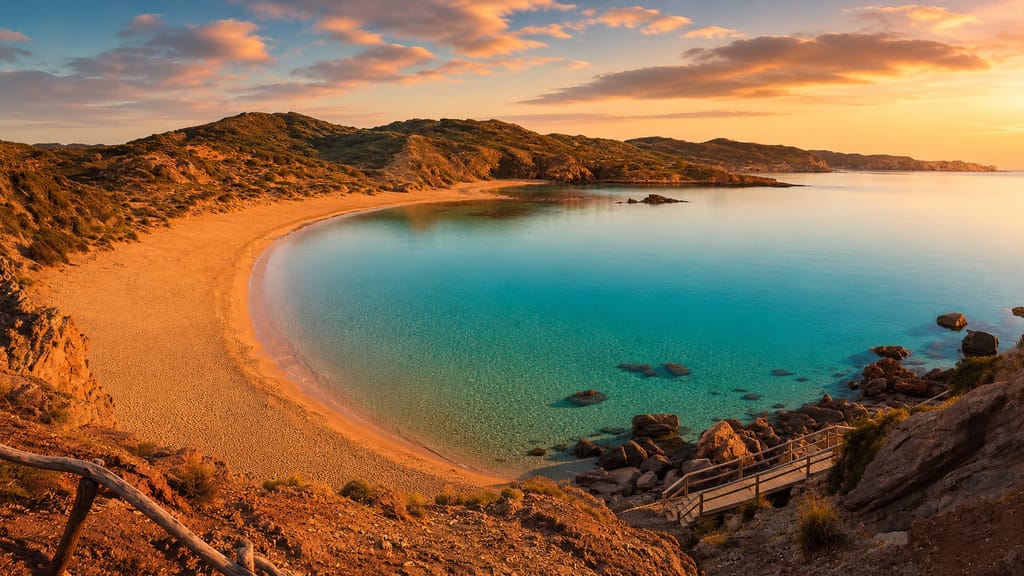
This is the stretch running from Ciutadella, at the western tip, to Fornells. Here you will find some of the most famous unspoilt coves of the north, nearly all of them reached on foot across rough country and very exposed to the wind.
Cala Morell
In the municipality of Ciutadella, about 9-11 km from the town, in the inlet of Cul de sa Ferrada. It is well sheltered, shaped like an "L", and is easily reached by car on a tarmacked road with parking; in summer there is a bus. It is not an unspoilt cove: the surroundings are built up. What makes it special is twofold: the snorkelling in its protected nook and the prehistoric necropolis of caves carved into the rock right beside it. You will find the details in the Cala Morell guide.
Cala Pilar
One of the most singular coves in Menorca, between Ciutadella and Ferreries (turn-off from the Me-1 road, towards km 34). It is unspoilt and wild: it can only be reached on foot, around 1.3 km of descent across the countryside, 30-40 minutes with barely any shade. The reward is that sand in reddish, almost Martian tones, which is what it is known for. It is very exposed to the Tramuntana, so the day is what counts. How to get there and what to expect, in the Cala Pilar guide.
Algaiarens (La Vall)
North of Ciutadella, inside an ANEI (Area of Special Natural Interest), via the turn-off signposted as "La Vall". They are in fact two unspoilt beaches, Es Tancats and Platja des Bot, with a broad, sheltered sweep of sand. You drive as far as a car park (free) and then a short 5-10 minute stroll; for Platja des Bot you walk a little further, close to 1 km. A well-kept natural setting, with no building. More information in the Algaiarens (La Vall) guide.
Cala Pregonda and Cala Pregondó
Pregonda is probably the most iconic cove in the north. It lies in Es Mercadal, inside the North Marine Reserve, west of Binimel·là. It is unspoilt, with golden-reddish sand and islets just off the shore (the Escull de Pregonda) that make up one of the most recognisable views on the island. It has no road access: you reach it on foot, about 2 km (half an hour with no shade) from the Binimel·là car park, or by sea. There is a full account in the Cala Pregonda guide.
Right beside it, just before you arrive, is Cala Pregondó, even more out of the way and protected by reefs. It shares the same access on foot along the Camí de Cavalls (or by sea) and it is one of those small, sheltered coves that gain a great deal when you arrive by water. Being more hidden, it tends to be quieter than its famous neighbour.
Binimel·là
In Es Mercadal, inside the North Marine Reserve and very close to Pregonda. It is almost unspoilt, with a natural setting that is barely built on, although in practice it works as the gateway to the north: you drive as far as a car park (the last stretch of track is in poor condition) and then about 400 metres on foot to the sand. From here the Camí de Cavalls paths set off towards Pregonda, Pregondó and Cala Barril. If you are going to do the area on foot, this is your base camp.
Cala Barril
Between Cavalleria and Binimel·là, also in Es Mercadal. It is unspoilt and lonely, one of those almost nobody sets foot on: the access on foot is about 3 km of walking rated as high difficulty, with no road access. That is why it is one of the coves that really makes sense above all by sea, when the state of the north allows it. Little more to add: sand, rock and silence.
Platja de Cavalleria
Near the Cap de Cavalleria, in Es Mercadal. Wide, scenic, with reddish sand, the 1857 lighthouse commanding the headland and the Roman site of Sanitja a stone's throw away. It is not unspoilt in the sense of isolated: you reach it easily by car as far as a car park and about 5 minutes on foot. It is one of the most photographed beaches in the north for the contrast between the warm sand and the water. Details in the Platja de Cavalleria guide.
Cala Mica
Between Binimel·là and Cavalleria, inside the Marine Reserve. Unspoilt, quiet and with very good snorkelling thanks to the biodiversity of the reserve. It has no direct road access: you reach it on foot or by bike, around 1.5 km (about 15 minutes). It is the classic northern cove that rewards anyone who bothers to walk a little: clean water and few people.
Coves of the north-east (Fornells to Maó)
From Fornells eastwards you reach the stretch of the Parc Natural de s'Albufera des Grau, with very remote unspoilt coves and the dark slate landscapes of Favàritx. Here are two of the few northern coves that really are a destination on our outings (depending on the day): Cala Tortuga and Cala Presili.
Cala Tirant
Next to Fornells, in Es Mercadal. It is a wide, open bay, with a built-up centre nearby and easy access by car with parking plus a short stroll. Because of its orientation, it is very exposed to the Tramuntana, which makes it popular with those looking for wind. As a cove for a quiet swim it is not one of the most sheltered in the north.
Cala Pudent
In the municipality of Maó, inside the Parc Natural de s'Albufera des Grau, between Es Grau and Mongofre. Unspoilt and remote: it can only be reached on foot along the Camí de Cavalls or by sea. It is one of those coves almost no one sees because it is hard to reach, which is exactly its value.
Cala Tortuga
In the Parc Natural, near the Far de Favàritx, in Maó. Unspoilt, with pale sand, surrounded by the lunar landscape of black slate that defines this headland. You reach it on foot from the lighthouse car park, about 10-15 minutes. It is one of the northern coves we do usually reach by sea when the day is right, sparing you the walk. More in the Cala Tortuga guide.
Cala Presili
Neighbour of Tortuga, also beside Favàritx and inside the natural park. Unspoilt, with that same dark slate landscape that contrasts so strongly with the water. Same 10-15 minute access on foot from the lighthouse car park. Like Tortuga, it is a real destination on our northern outings depending on the state of the sea. You will find the details in the Cala Presili guide.
Arenal de Mongofre and Cala Morella Nou
Two very remote coves within the Mongofre estate, in the Parc Natural (Maó). Both are unspoilt and reached on foot along the Camí de Cavalls or by sea, crossing private land. They are among the most isolated on the coast: by land they call for a good walk, and by sea they depend entirely on the north being calm. Pure nature, without a single facility.
Es Grau
In Maó, next to the village of Es Grau, right at the heart of the Biosphere Reserve. It has easy access by car and parking, calm shallow waters (a shallow channel) that make it ideal for families with children. It also works as a launching point for trips out to the Illa d'en Colom. It is not unspoilt, but its surroundings are very well protected. More in the Es Grau guide.
Illa d'en Colom
The largest island off the Menorcan coast, facing Es Grau, inside the Parc Natural and uninhabited. It can only be reached by sea (boat or seasonal ferry, or by kayak from Es Grau). It has two sandy coves and good snorkelling, and it is a classic boat-trip destination in the north-east. How to visit it, in the Illa d'en Colom guide.
Sa Mesquida
About 7-8 km from Maó, with an adjoining village and an 18th-century defence tower. It is easily reached by car with parking. It is popular for surfing and windsurfing because of its exposure to the north; the small cove next to it is a possible anchorage on calm days. It is not unspoilt, but it keeps the air of a fishing village.
The northern coves best reached by boat
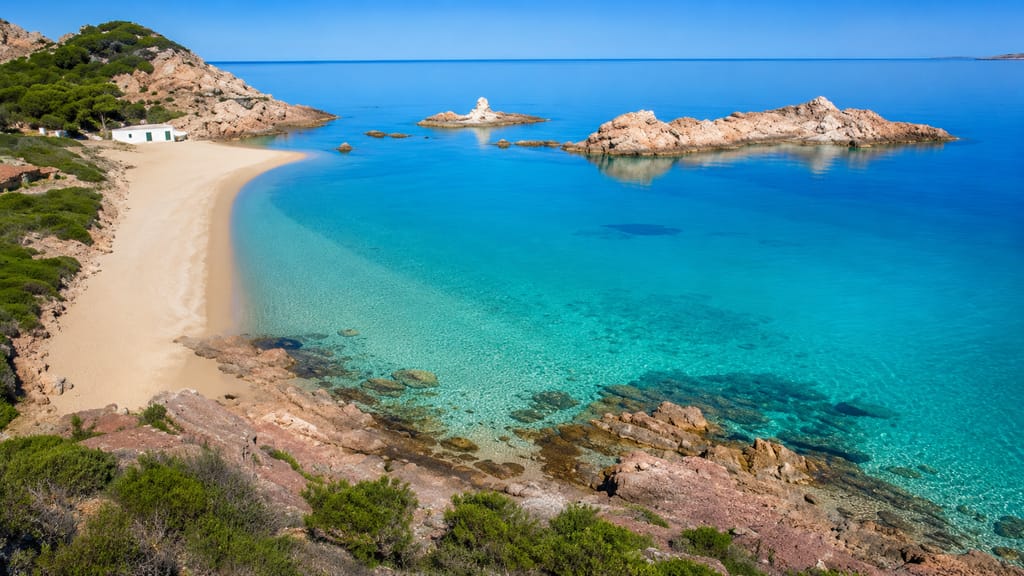
Not all the northern coves are enjoyed in the same way. These are the ones that, having no road access and being far from any road, gain most when you arrive by sea (as long as the Tramuntana gives you a break):
- Cala Pregonda and Cala Pregondó: the two iconic coves of the north-west, half an hour's walk with no shade from Binimel·là. By sea you save yourself the trek and arrive straight at one of Menorca's postcard views.
- Cala Barril: lonely, with a long, hard 3 km approach on foot. One of those that really only makes sense by water.
- Cala Pudent, Arenal de Mongofre and Cala Morella Nou: the remote ones in the Parc Natural, with no road access, where the sea is one of the few comfortable ways in.
- Illa d'en Colom: by definition you can only get there by sailing.
- Cala Tortuga and Cala Presili: at Favàritx, reachable on foot from the lighthouse but perfect by sea, letting you take them in on the same outing without walking twice.
An honest clarification, which is how we work: our base is at Es Canutells, in the south, and the usual route is along the south coast. We head up to the north depending on the day, when the sea and the wind allow it, and the only northern coves listed as a confirmed destination on our website are Cala Tortuga and Cala Presili. For the rest, what I have told you is how they are reached in general (on foot, along the Camí de Cavalls or by sea); I am not promising the boat will take you to a particular northern cove. If you want to work out which outing suits you, take a look at our boat routes or go ahead and book your excursion and we will put it together according to the sea on the day.
Frequently asked questions about the coves of northern Menorca
Which are the unspoilt coves of northern Menorca?
Among the best known are Cala Pregonda, Cala Pregondó, Cala Pilar, Cala Barril, Cala Mica, Cala Tortuga, Cala Presili, Cala Pudent, Arenal de Mongofre and Cala Morella Nou. Most have no road access: you reach them on foot along the Camí de Cavalls or by sea.
What is the difference between the coves of northern and southern Menorca?
The south has fine white sand and turquoise water over a pale seabed, with coves set into ravines. The north is wilder: reddish and golden sands, dark slate rock, islets and a more open landscape. The north is also exposed to the Tramuntana, the wind that shapes both swimming and sailing.
What is the Tramuntana and how does it affect the northern coves?
It is the north and north-westerly wind that blows hard for a good part of the year in Menorca. When it sets in it raises a swell and clouds the water, leaving many northern coves uncomfortable or unreachable by sea. That is why sailing along this coast depends so much on the state of the day.
Which northern coves does Sea Travel Menorca reach by boat?
We set out from Es Canutells, in the south, and head up to the north depending on the state of the sea and the wind. The northern coves confirmed as a destination on our website are Cala Tortuga and Cala Presili, beside the Favàritx lighthouse. We do not promise always to reach a particular cove: the route adapts to the sea each day.
Can you drive to the coves of northern Menorca?
To some, yes: Cala Morell, Algaiarens (La Vall), Platja de Cavalleria, Cala Tirant, Es Grau and Sa Mesquida have parking nearby. Others, such as Cala Pregonda, Cala Pilar, Cala Barril or those in the Parc Natural de Mongofre, can only be reached on foot along the Camí de Cavalls or by sea.
Are there any facilities at the unspoilt coves of the north?
At the unspoilt ones, no: no bar, no showers, no lifeguard, no bins. You need to bring water, something to eat and sun cream, and take your own rubbish back with you. The built-up ones (Cala Morell, Es Grau, Cala Tirant) do have some facilities nearby.
See the northern coves from the water
When the Tramuntana gives a break, the north is unforgettable from the sea. Tell me your date and we'll put the trip together according to the sea on the day.
Check available dates