
Cala Pregonda (Menorca): How to Get There and What to See
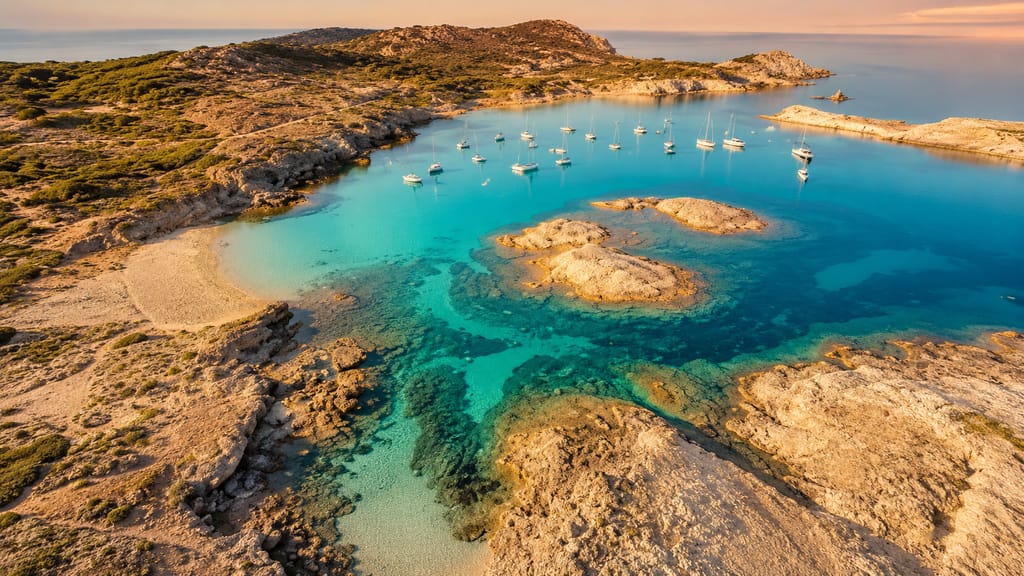
For many people Cala Pregonda is the most photographed cove on the north coast of Menorca, and there's a reason for that. It sits in the municipality of Es Mercadal, inside the northern Marine Reserve, west of Binimel·là. No road reaches it, there's no beach bar and no sunbeds: to set foot on its sand you have to walk in or arrive by sea. That's why it still looks much as it did decades ago.
What sets it apart is obvious the moment you come over the rise: the sand leans towards red, the surrounding rocks are ochre and coppery, and out in front of the water a cluster of islets closes off the cove and shelters it from the open sea. The best known is the Escull de Pregonda. That combination of volcanic rock, golden sand and clear water is what makes it so recognisable and, at the same time, so different from the white coves of the south.
Where It Is and What It's Like
Pregonda belongs to the north coast, the side that faces the tramuntana. Here the landscape changes compared with the south: less pine forest running down to the water and more open rock, earthy colours and a wilder feel. The cove is unspoilt, undeveloped and without services, which means you need to come prepared: water, food, shade and whatever you bring in, you carry back out again.
Just before Pregonda, coming along the path, lies Cala Pregondó, smaller and more tucked away, sheltered by reefs. And west of Binimel·là begins this whole run of unspoilt northern coves. It's worth being clear about it so you don't mix them up: many people call the whole stretch Pregonda, but each beach has its own name.
How to Get to Cala Pregonda
On Foot, from Binimel·là
The usual way to arrive by land is to leave the car at the Binimel·là car park (the last stretch of the road is unsurfaced, so take it slowly) and carry on walking west. From there it's around 2 km on foot, roughly 30 minutes, along a coastal path, part of it following the Camí de Cavalls.
It's a lovely walk but with hardly any shade. In July and August, around midday, it's hard going. Wear closed shoes, bring plenty of water and a hat, and think about doing it first thing in the morning or late in the afternoon. It's not a technical walk, but there are sandy and rocky sections that tire you more than they look in the heat.
By Sea
The other way to get to know Pregonda is from the water. The north of Menorca has anchorages in this area and, by boat, you save yourself the walk and you see the islets and the coastline in a way you can't from land. That said, it's a coast exposed to the tramuntana: when it blows from the north the sea here gets up and it's not the day for it.
Our llaüt sets off from Es Canutells, on the south coast, and we sail south or north depending on the day, on how the sea and the wind are behaving. I'm not going to promise you we'll head to Pregonda on a particular outing, because it depends on the weather and I don't want to sell you smoke. What I can do is tell you what's within reach that day and put together a route that's worth it. If the idea of seeing the north coast by sea is on your mind, take a look at the routes and we'll talk it through.
What You'll Find
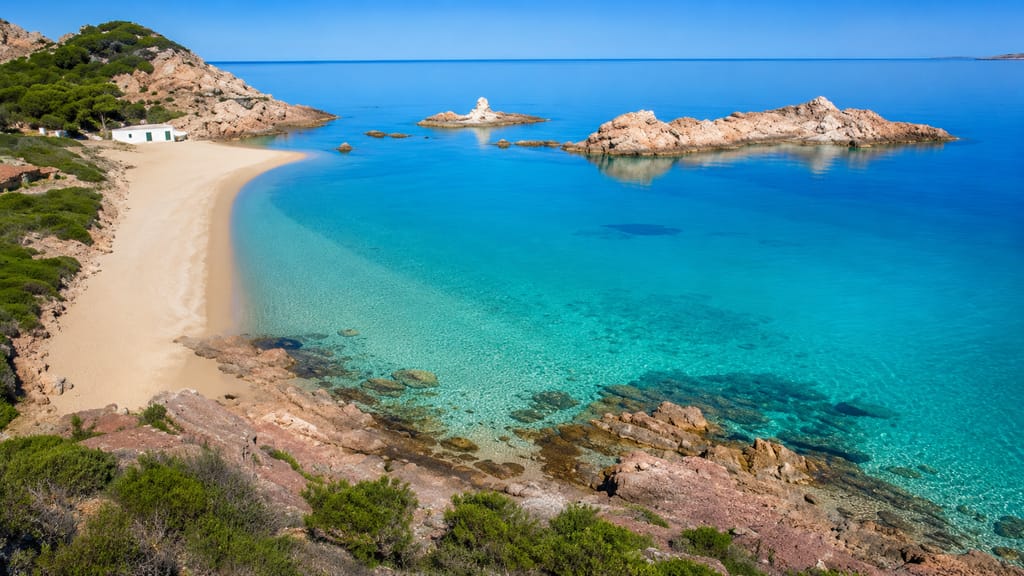
Pregonda is a sandy cove with that reddish tone of its own, a mix of sand and remains of volcanic rock. The water comes in clear and shallow at the shore, and the islets in front act as a natural barrier, so when the north is calm you get a quiet swim.
For snorkelling, the rocky zone around the islets is the most interesting part: rocky bottoms with rock fish, some seagrass and corners to nose around with mask and snorkel. Don't expect a textbook turquoise pool from the south; this is another kind of beauty, wilder.
As for services, nothing at all. There's no bar, no toilets, no lifeguard and no parasols to rent. Natural shade is scarce, so if you go in the middle of the day bring your own shade. All of this is part of its charm: it's a cove that has stayed exactly as it was, undeveloped, within a protected setting.
Best Time to Go and Tips
- When to go. June and September are the best: warm water and far fewer people than in the thick of August. In high season, especially at midday, you notice the crowds despite how remote it is.
- The wind rules. It's the north coast: with tramuntana, neither a comfortable swim nor a pleasant approach by sea. Check the forecast before planning your day. With a southerly wind or calm conditions is when Pregonda shines.
- Start early. Doing the walk from Binimel·là early spares you the heat of the shadeless path and leaves the cove quieter.
- Take everything with you. Water, food, sun protection and your rubbish back. You're in the northern Marine Reserve: respect the surroundings, there are no bins and nobody to clear up for you.
- Footwear. The path has sand and rock; good sandals or trainers are appreciated.
Neighbouring Coves
If you're planning your day around this part of the north, it makes sense to string a few together. The most obvious is Cala Pregondó, right next to Pregonda and even more secluded. And the natural starting point is Binimel·là, where you leave the car and where the path begins.
To place it all in context, two reads will help: the guide to the coves of northern Menorca, with the beaches of this coast and how to reach each one, and the complete guide to the coves of Menorca, covering south and north. If what you fancy is seeing the coast from the sea, on the boat routes page I explain how we work depending on the day.
Frequently Asked Questions
How do you get to Cala Pregonda?
By land, leaving the car at the Binimel·là car park and walking around 2 km west, roughly 30 minutes along a coastal path. There's no car access to the cove itself. The other option is to arrive by sea.
Can you drive all the way to Cala Pregonda?
No. The car only goes as far as Binimel·là, and the last stretch of the road is unsurfaced. From there you can only continue on foot or arrive by sea; there's no road or car park at the cove itself.
How long does it take to walk from Binimel·là?
About 30 minutes, around 2 km, along a path with hardly any shade. In summer it's better to do it first thing or at sunset, and to bring water and a hat.
Does it have services or a beach bar?
No. Cala Pregonda is unspoilt and undeveloped: there's no bar, toilets, lifeguard or parasols. You need to bring water, food and shade, and take all your rubbish away.
When is the best time to visit Cala Pregonda?
In June or September, with warm water and fewer people. As it's the north coast, avoid the tramuntana days: with a northerly wind the sea gets up and it's pleasant neither for swimming nor for arriving by sea.
Want to see it from the water?
Tell us your date and we'll plan the trip around the sea that day.
Check available dates