
Menorca Coves: the Complete Guide
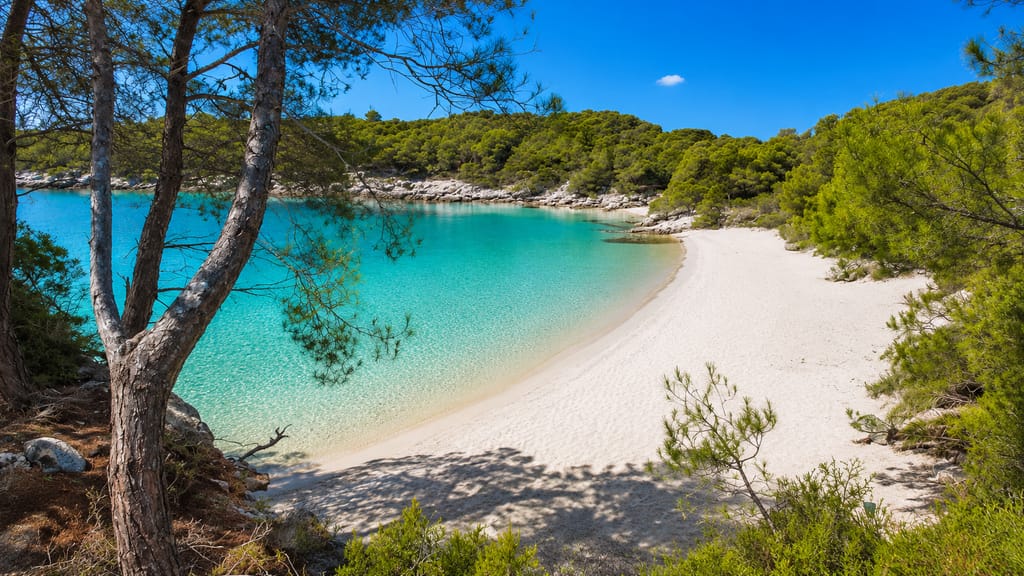
Menorca has more than a hundred coves around a coastline you can drive in a morning. No other Mediterranean island packs them this tightly, and the reason is geological: the coast changes character depending on which side of the sea you stand on. This guide helps you understand what coves there are, how the north and south differ, which ones are still wild and how to reach each one, whether on foot, by car or by sea. I'm writing from Es Canutells, where I keep the llaüt moored, after many seasons working this stretch of coast.
What the coves of Menorca are and why they are unique
A cove is a small, sheltered inlet, usually at the foot of a ravine that runs down to the sea. In Menorca that happens dozens of times over, because the interior is cut through with ravines, and each one empties into its own pocket of sand or rock.
What surprises first-time visitors is that the island has two coasts that look nothing alike. The south is all fine white sand and turquoise water, with pinewoods running almost down to the shore. These are the postcard coves: Macarella, Mitjana, Turqueta. The seabed is pale, shallow near the shore, and the colour of the water comes from that light sand seen through calm water.
The north is another world. Here the rock is older and iron-rich, so the coves lean towards reddish, ochre and dark tones. Pregonda looks Martian; Cala Pilar has red sand; Presili, beside the Favàritx lighthouse, is black slate. The water is still crystal clear, but the landscape is rugged, wind-battered, with fewer pines and more low scrub.
North and south: two coasts, two characters
The difference isn't only colour. It's character, and it comes down to the wind.
The south is more sheltered from the tramuntana, the northerly wind that blows hard for much of the year. That's why its coves tend to be more protected, the sea comes in calmer and sailing is, on the whole, more comfortable. It's the coast where I keep my base and where I run most of my trips.
The north faces that tramuntana head on. When it blows, it kicks up the sea and many northern coves become uncomfortable or simply unreachable by water. In return, on the days the wind gives a break, the north offers landscapes you won't find anywhere else on the island: reddish bays, islets, isolated lighthouses. I set out from Es Canutells (south) and, depending on the day, I also head north; but that call is made by the sea, not the calendar. If the tramuntana is up, we stay in the south, end of story.
For visitors on land the split is similar: the southern coves tend to have slightly easier access and gentle water for families; the northern ones demand more walking or better weather, and reward you with solitude and scenery.
Wild coves and built-up coves
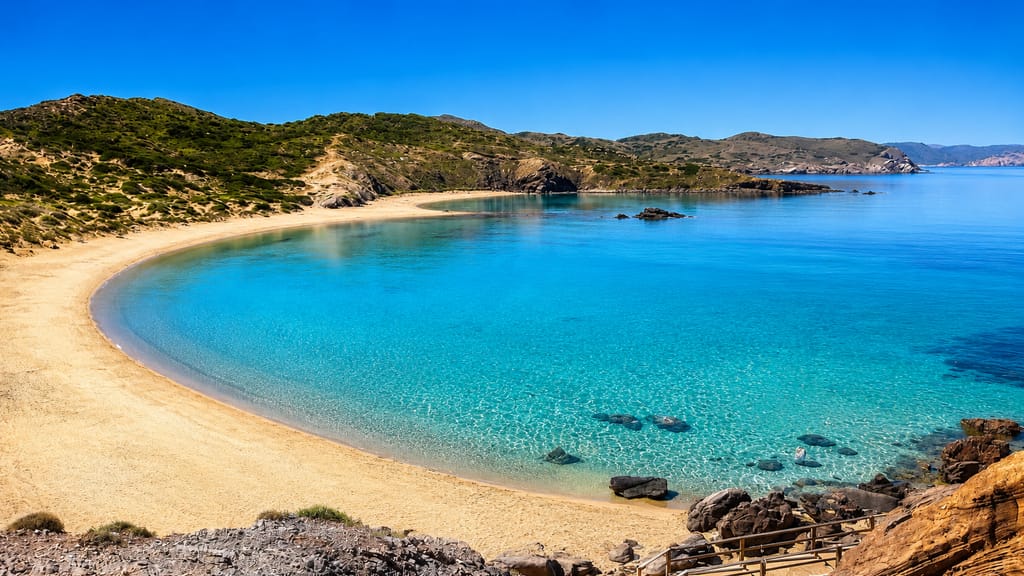
Not all the coves are equally wild. It's worth telling them apart before you plan your day.
The wild ones have no buildings and no services: no beach bar, no showers, barely any shade. You arrive, you swim and you leave with what you brought. In the south, Trebalúger, Escorxada, Fustam or Macarelleta belong to this group; in the north, Pregonda, Cala Pilar, Cala Mica or the ones inside the Parc Natural such as Presili and Tortuga. Many have no car access at all: you either walk a fair way or arrive by sea.
The built-up coves, or those with a tourist hub, have parking, bars and sometimes sunloungers, but also more people. Cala Galdana, Son Bou, Cala en Bosc, Binibèquer or Es Canutells itself are examples. Some, like Galdana, work as a base for walking out to the neighbouring wild coves.
A quick tip: the harder a cove is to reach by land, the cleaner and quieter it tends to be, and the more sense it makes to consider arriving by sea. The ones with a big car park right by the sand are the first to fill up in August.
How to reach the coves
There are three ways, and it pays to combine them depending on the day and the cove.
On foot along the Camí de Cavalls. This is the historic path that rings the whole island, 185 km split into 20 stages, and it passes above practically every cove. Many of the wild ones can only be reached on foot: Trebalúger is 1 to 1.5 hours from the nearest car park; Pregonda, about 30 minutes with no shade; Cala Pilar, 30 to 40 across rough ground. Take water and decent footwear, because much of it is stony terrain in full sun.
By car. The built-up coves and some wild ones have a road and parking, but watch out: in summer several car parks fill by mid-morning and some accesses close. The best-known case is Macarella, where from June to September a barrier goes up and you have to arrive by shuttle bus with a booking.
By sea. From the water you arrive with no walking, no parking and no queues, and you see the coves the way they look best: the line of the cliffs, the caves, the true colour of the seabed. We set out from Es Canutells on a 9-metre Menorcan llaüt, for groups of up to 7 people, and we put the route together according to the sea that day. You can see how we organise the routes along the coast or book your date. One thing, though: the route adapts to the wind and the state of the sea, so we don't promise a particular cove in advance. If the day isn't right for heading west or going north, I'll tell you before we leave.
Protected areas: sailing with your head on
Much of Menorca's coastline is protected, and you can tell in the water.
The whole island has been a UNESCO Biosphere Reserve since 1993, a recognition of the balance between the countryside, the coast and human activity. At sea, that translates into concrete care.
In the north there is a Marine Reserve that protects the seabed between Cap Gros and Punta Negra, with limits on fishing and on anchoring at certain points. And in the north-east lies the Parc Natural de s'Albufera des Grau, the heart of the Biosphere Reserve, which takes in the lagoon, the Illa d'en Colom and coves such as Presili, Tortuga or Cala Pudent. There the rules on approach and anchoring are stricter, precisely so it stays as clean as it is.
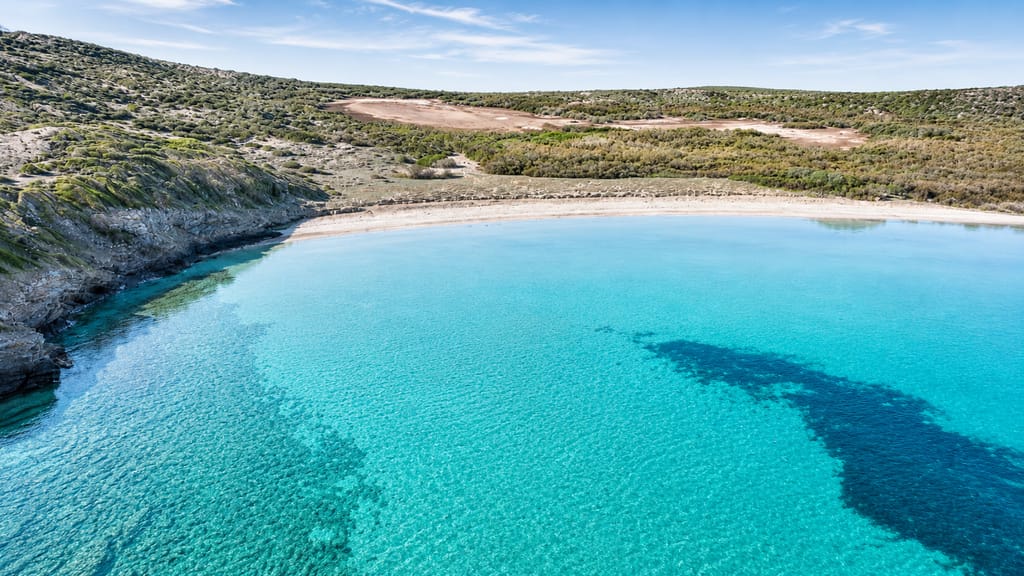
The detail that matters most in any cove, protected or not, is the posidonia: that meadow of seagrass on the seabed that keeps the water clear and gives life to the ecosystem. It isn't an alga, it's a plant, and dropping anchor on it tears it apart. That's why we always anchor on sand or on a mooring buoy, never on posidonia. It's what the law requires and it's what keeps the water this clear for whoever comes next.
The must-sees, by area
There's no single list that works for everyone, but there are coves that almost nobody wants to miss. I've split them by coast so you can get your bearings.
In the south are the most photographed: Macarella and its little sister Macarelleta, Mitjana, Turqueta, Trebalúger. If you're going to centre your trip on this coast, you'll want the guide to the coves of southern Menorca, where I go through it area by area from Ciutadella to Maó. And if you want to compare specifically the best ones to explore by boat, there's the article on the best coves of southern Menorca by boat.
In the north, the ones that leave a mark are Pregonda, Cavalleria, La Vall (Algaiarens) and, towards Favàritx, Presili and Tortuga. They're harder to reach and more weather-dependent, but the scenery makes up for it. It's all broken down in the guide to the coves of northern Menorca.
Some of these coves we cover by sea with departures from Es Canutells. You'll find detailed information on Cala Macarella, Cala Mitjana, Cala Trebalúger and Cala en Porter, each with its own profile on how to get there by boat.
Practical tips for visiting them
A handful of things worth knowing before you turn up on the sand.
The season. The coves are at their best from May to October. July and August have the most sun and the warmest water, but also the most people and the most cars. June and September tend to be the sweet spot: good weather, pleasant water and far less crowding.
Summer access. Macarella has a barrier and a shuttle bus from June to September; other southern car parks fill early. If you're driving in high season, set off early or have a plan B. By sea you avoid the problem at the root.
Shade and services. The wild coves have no bar, no parasols and in some cases barely any pinewood. Take water, food, a hat and sun cream, and don't count on finding anything when you arrive. On the llaüt, by contrast, you have an awning, a cooler with ice and water on board, which on a long day is a real comfort.
The wind rules. Before choosing a cove, check which way it's blowing. With tramuntana, the north gets tricky and the south becomes the safe bet. It's the same logic we use to decide the route each morning.
Respect the seabed. Don't anchor on posidonia, don't take anything from the protected surroundings and leave the cove as you found it. That's what keeps Menorca being Menorca.
If you want to see them the way they look best, from the water and without the walking, take a look at our routes and tell me your date. We put the trip together according to the sea that day.
Frequently asked questions
How many coves does Menorca have?
More than a hundred spread along the whole coast, ranging from wide beaches to tucked-away sandy coves and rocky inlets. Many remain wild, with no development and no services.
Are the coves of the north or the south better?
It depends what you're after. The south has white sand, turquoise water and calmer seas; the north, reddish, rugged landscapes, more solitude and more dependence on the wind. Many visitors combine the two coasts.
Which are the wild coves of Menorca?
In the south, Trebalúger, Escorxada, Fustam or Macarelleta; in the north, Pregonda, Cala Pilar, Cala Mica, Presili or Tortuga, among others. Almost all of them can only be reached on foot along the Camí de Cavalls or by sea, and they have no services.
How do you reach the most hidden coves?
On foot along the Camí de Cavalls, which rings the island and passes above almost all of them, or by sea. The ones with no road access are precisely the ones that make most sense to visit by boat, because you save yourself the walk in the sun.
When is the best time to visit the coves?
From May to October. July and August are the warmest but the busiest; June and September offer good weather with fewer people. We sail from 15 May to 15 October.
Can you drive to Cala Macarella in summer?
From June to September car access is restricted by a barrier. In those months you get there by shuttle bus with a booking, on foot along the Camí de Cavalls or by sea.
See the coves from the water
If you want to discover Menorca's coves the way they look best, from the sea and without the walking, tell me your date and we'll put the trip together according to the sea that day.
Check available dates